Overview
Victoria’s marine environment is a complex system of habitats, species, and ecological processes that underpin biodiversity, productivity, and resilience. To safeguard these values and guide sustainable use, Victoria has developed the Marine Key Ecological Features (KEF) Framework. This framework provides a science-based, transparent, and repeatable method for identifying and prioritising areas of ecological significance.
The framework applies internationally recognised principles, including those underpinning Ecologically or Biologically Significant Areas (EBSAs) defined by the Convention on Biological Diversity, and uses advanced spatial mapping and structured ecological criteria to highlight features that are rare, unique, or critical for ecosystem function and life-history stages.
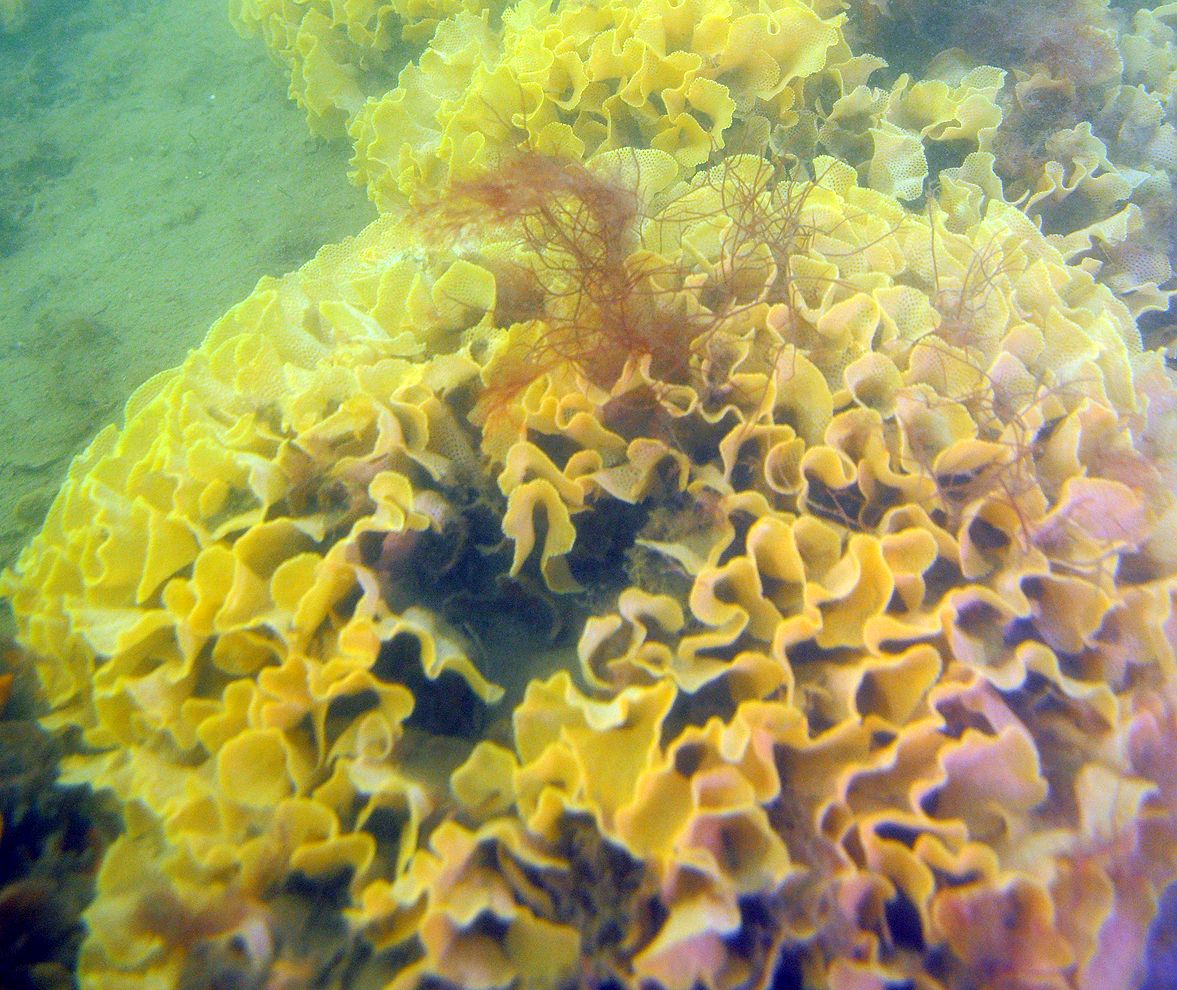
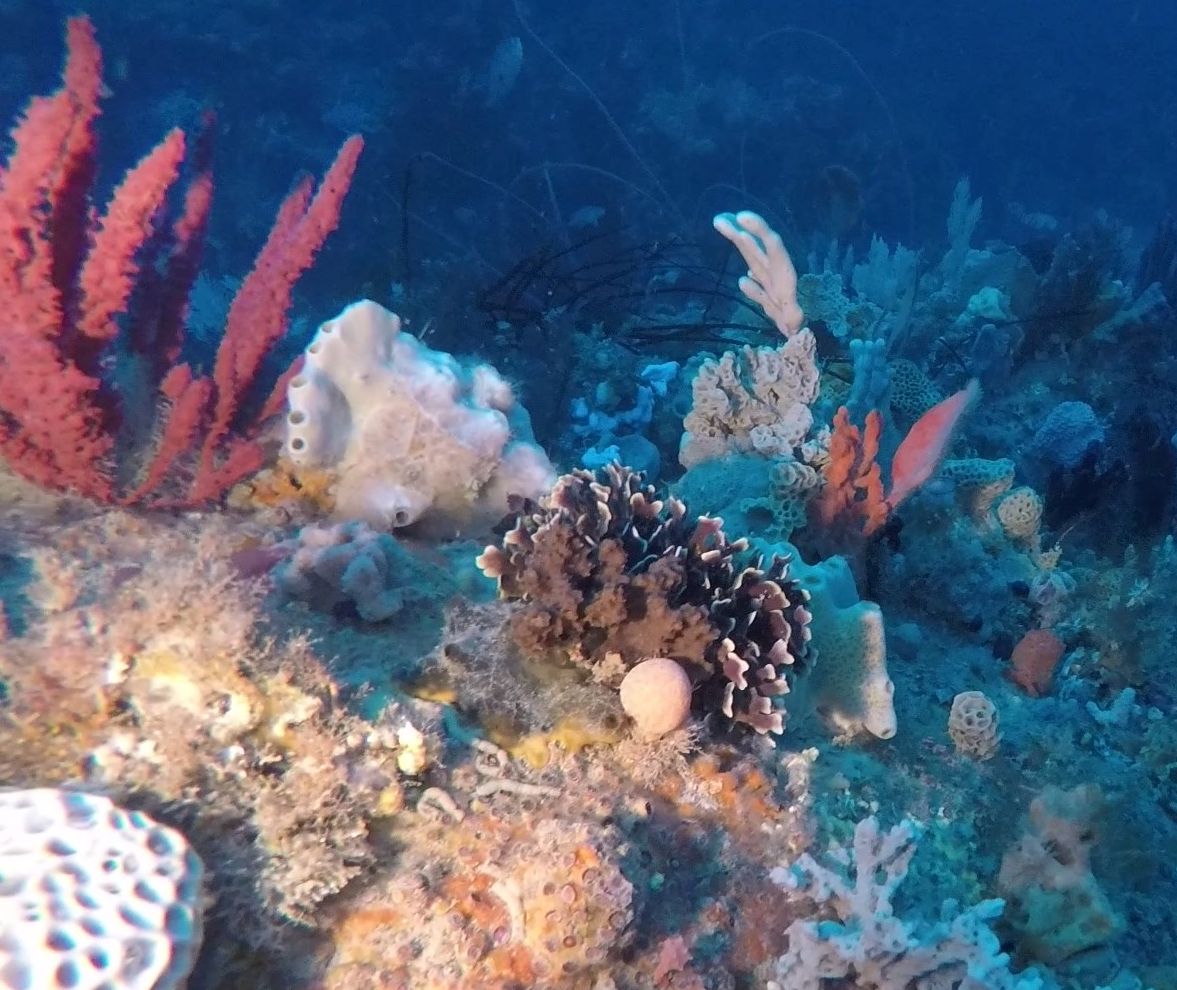
Victoria’s Marine Key Ecological Features (KEFs) Framework provides a scientifically robust and spatially explicit method for identifying and prioritising ecologically significant marine areas within and adjoining Victorian waters. It builds on earlier mapping efforts, addressing gaps in resolution, consistency, and scientific rigor.
KEFs are contiguous, non-overlapping spatial units that encompass multiple key features within a single ecological domain. They represent areas that are rare, unique, or critical for maintaining ecosystem function and biodiversity.
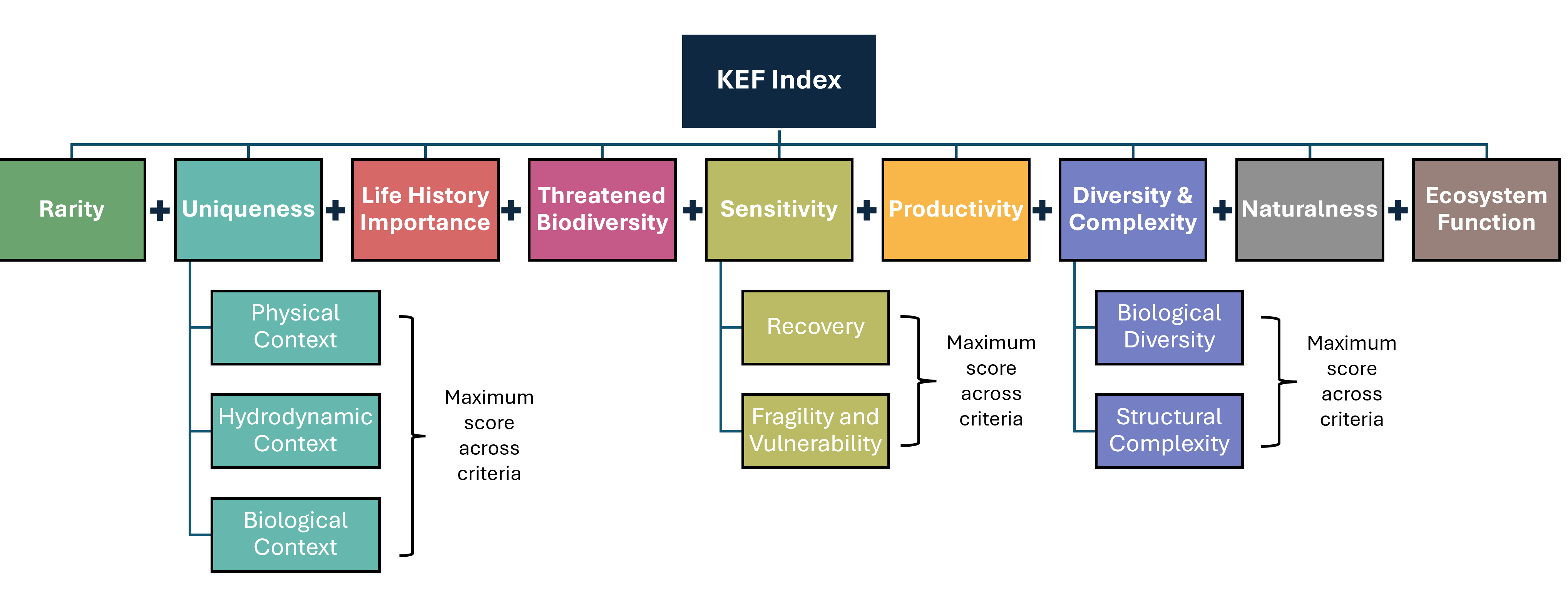
Each KEF is assessed against nine ecological dimensions, adapted from global best-practice frameworks such as the Convention on Biological Diversity’s EBSA criteria:
- Rarity: Features with highly restricted distribution or endemic species
- Uniqueness: Distinct physical, hydrodynamic, or biological traits not replicated elsewhere
- Life History Importance: Habitats essential for breeding, nursery, feeding, or migration
- Threatened Biodiversity: Areas supporting threatened species or ecological communities
- Sensitivity: Features that are fragile or exhibit very slow recovery
- Productivity: Persistent hotspots of primary or secondary production
- Diversity & Complexity: High species richness and structural heterogeneity
- Naturalness: Areas with minimal human disturbance, retaining intact ecological processes
- Ecosystem Function: Features that exert a disproportionate influence on surrounding ecosystems
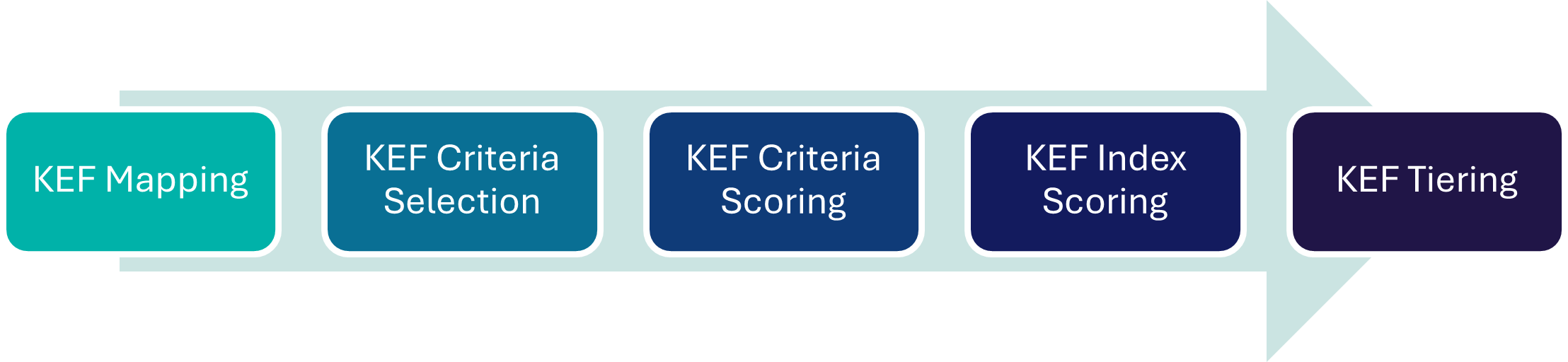
Mapping was the first step in developing a candidate list of Marine Key Ecological Features (KEFs), ensuring that a full spectrum of key features and functions across Victoria’s marine and coastal environments was captured. KEF boundaries were defined using Victoria’s marine biogeographical settings, which provide a nested hierarchy of spatial mapping units from broad ecoregions to fine-scale biounits.
The process integrated multiple spatial datasets, including statewide bathymetry, LiDAR seabed reflectance, high-resolution aerial imagery, and DEECA’s CoastKit atlases for biotope distributions and special features. Habitat zones were delineated by grouping biotopes with similar ecological properties, guided by distinct physical features such as reef–sand transitions, channel margins, and vegetation edges.
Candidate KEFs were identified through systematic screening for indicators of ecological significance, including rare or unique biotopes, high structural complexity, biodiversity hotspots, and habitats critical for species life-history stages. These areas were refined to align with physical boundaries and validated through expert review and supporting evidence.
Each KEF is scored using a five-point ordinal scale combined with exponential weightings to reflect ecological significance. This approach ensures that features of exceptional importance have proportionally greater influence in the overall assessment.
Scoring System:
- Low: Score 1 (Weighting 1)
- Moderate: Score 2 (Weighting 5)
- High: Score 3 (Weighting 10)
- Very High: Score 4 (Weighting 20)
- Exceptional: Score 5 (Weighting 40)
This non-linear weighting system recognises that ecological significance is not incremental features of exceptional importance contribute disproportionately to biodiversity and ecosystem function.
Composite KEF Index:
Scores from all nine ecological dimensions are aggregated into a KEF Index, using the maximum score within each dimension to avoid diluting exceptional attributes. The KEF Index provides a transparent, quantitative measure of ecological significance for each KEF.
Tiering System:
The KEF tiering system provides a transparent prioritisation step to identify areas of the highest ecological value and highlight them for planning and policy purposes. Each KEF is assigned to one of the three tiers based on the number of ecological dimensions scoring ‘Very High’ or ‘Exceptional’, using aggregated weighted scores from the KEF Index across the nine dimensions:
Tier | Description | Threshold |
|---|---|---|
Flagship | Highest ecological value, scoring ‘Exceptional’ across most of the nine ecological dimensions. | ≥ 6 Exceptional scores (C40 ≥ 6) |
Highly Significant | Outstanding ecological importance, multiple ‘Very High’ or ‘Exceptional’ scores across the nine ecological dimensions. | ≥ 5 Exceptional scores and ≥2 Very High (C40 ≥ 5 & C20 ≥2, OR ≥ 4 Exceptional and ≥3 Very High (C40 ≥ 4 & C20 ≥ 3) |
Significant | Meets significance criteria, important for biodiversity and/or ecosystem processes. | All other combinations of scores |
Victoria’s Marine KEF Framework provides a practical basis for identifying and prioritising ecologically significant marine and coastal areas. It should be considered alongside legislative boundaries and policy instruments and used in conjunction with complementary tools.
Decision Support for Planning and Management
The three-tiered grading system (Flagship, Highly Significant, Significant) strengthens decision-making by clearly delineating areas of varying ecological significance. This reduces uncertainty and helps direct resources to where they deliver the greatest ecological benefit.
- Flagship and Highly Significant KEFs represent areas of the highest ecological significance and regulatory sensitivity. These areas may be treated as constraints for high-impact activities or warrant application of the precautionary principle, considering avoidance in the mitigation hierarchy.
- Significant KEFs indicate areas where development may be permissible under scalable management scenarios, employing specific mitigations and meeting sustainable use objectives.
This approach enables cost-effective conservation while providing clarity for proponents, helping direct development toward less-sensitive locations.
Applications of KEFs
Environmental Impact Assessment and Management Plans
KEFs provide a reference for assessing potential impacts of coastal and offshore developments. They guide mitigation measures and inform environmental management plans under the Marine and Coastal Act 2018, Environmental Protection Act 2017, and other statutory processes.
Marine Spatial Planning and Policy Implementation
Under the Marine and Coastal Act 2018, the Marine and Coastal Policy 2020 and the Marine Spatial Planning Framework require integrated, ecosystem-based approaches to managing competing uses of marine space. KEFs offer a robust basis for spatial prioritisation, ensuring that areas of high ecological significance are considered in planning decisions and trade-off analyses.
Strategic and Regional Planning
KEFs can inform regional planning by identifying areas of high conservation priority. They can be incorporated into Coastal and Marine Management Plans, providing a consistent approach for decision-making.
Industry and Blue Economy Development
As Victoria advances offshore renewable energy, aquaculture, and other marine industries, KEFs help identify areas where development should be avoided, minimised, or carefully managed to reduce conflict with biodiversity objectives. This aligns with international best practice for marine spatial planning, which emphasises early identification of sensitive areas to reduce regulatory risk and improve certainty for proponents.
Adaptive Management and Future Reviews
KEFs are designed as a dynamic knowledge product. As new data becomes available through habitat mapping, species monitoring, and predictive modelling, KEF boundaries and associated information can be refined to maintain relevance and accuracy.
Key Findings
Victoria’s marine KEF framework identified 341 Key Ecological Features, representing some of most ecologically significant areas in Victorian Waters and in the Bass Strait. Each KEF was assessed against nine ecological dimensions and scored using a composite KEF Index, resulting in a three-tier classification:
- 12 Flagship KEFs – areas of exceptional ecological significance, scoring “Exceptional” across most dimensions
- 13 Highly Significant KEFs – areas with multiple “Very High” or “Exceptional” scores
- 316 Significant KEFs – areas meeting the framework’s significance criteria
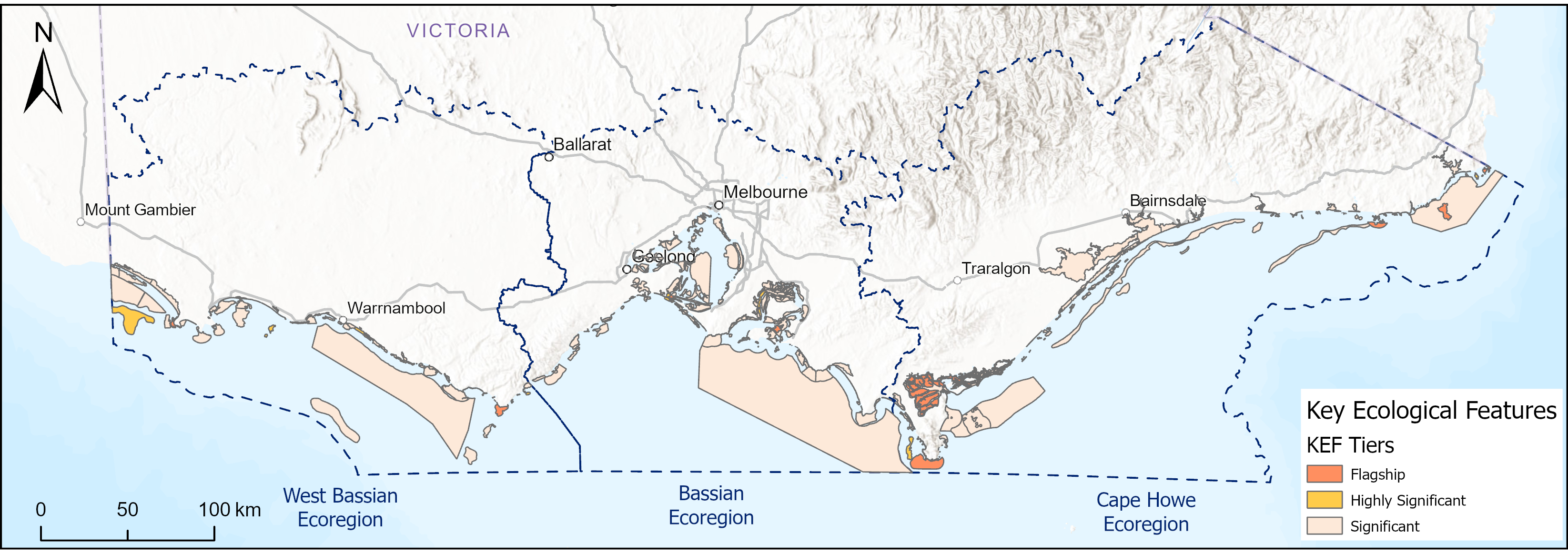
Analysis shows that 75% of all Flagship KEFs intersect with marine parks or reserves, but across all KEFs, only 10% of total KEF area falls within existing management zones. This indicates that most ecologically significant areas extend beyond statutory boundaries and require consideration in planning processes.
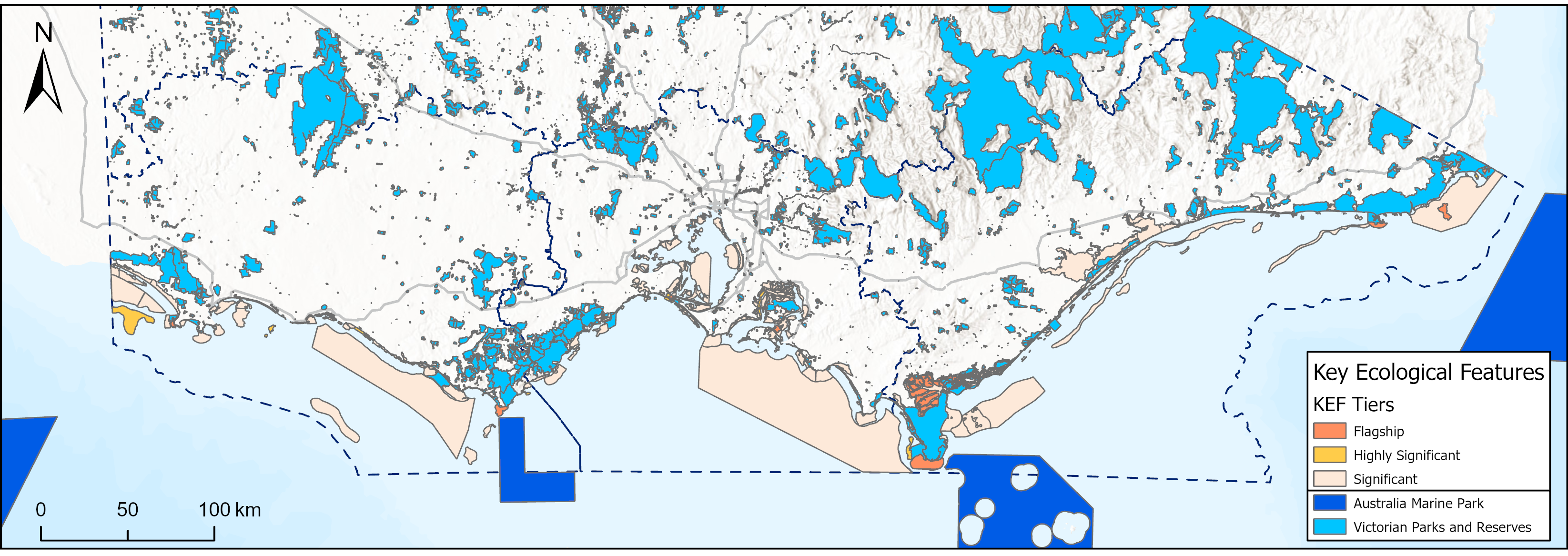
The KEF Framework significantly improves upon the Marine Asset Layer (MAL) developed in 2010 by providing finer-scale mapping, structured scoring, and tiered prioritisation. Many MAL polygons were split into smaller, ecologically nuanced units, enabling more precise identification of biodiversity hotspots.
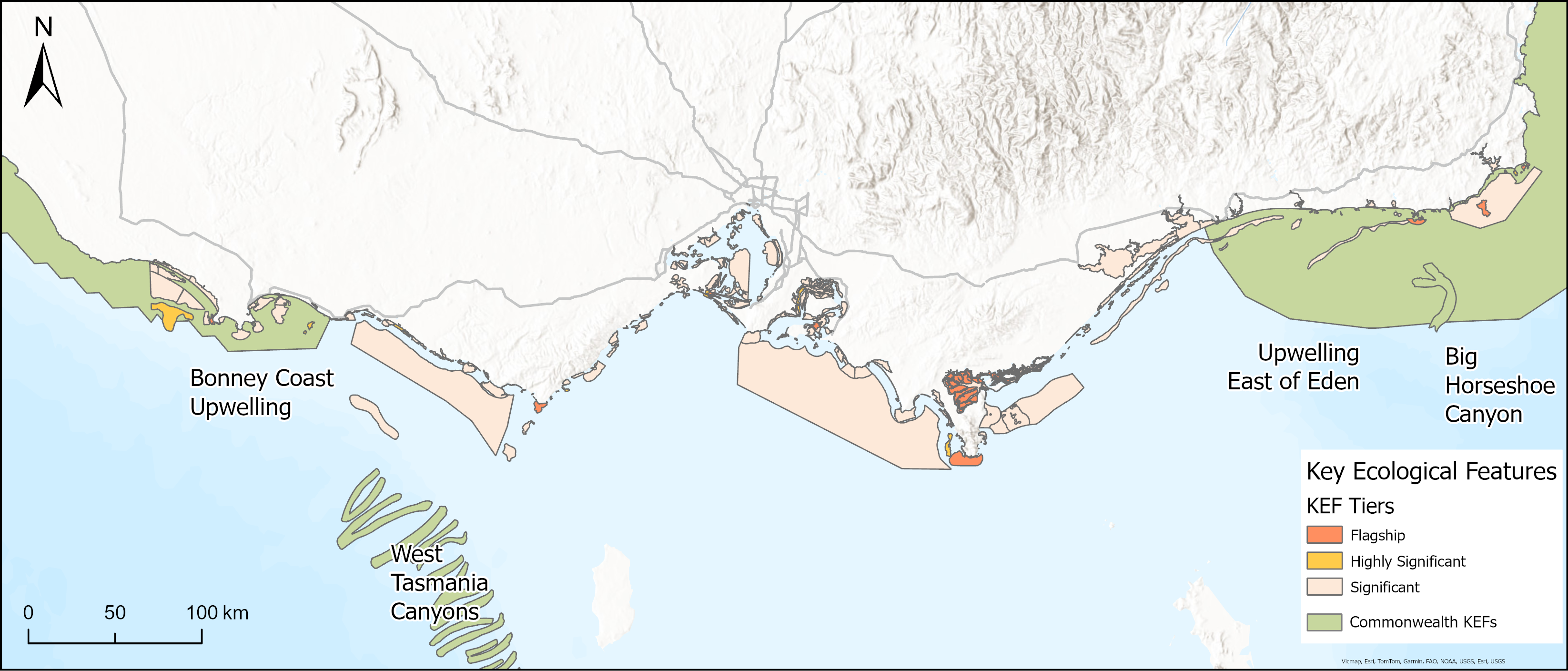
Four Commonwealth-designated Key Ecological Features occur within the Bass Strait region, including the Bonney Coast Upwelling and Upwelling East of Eden. These areas represent productivity hotspots and species aggregation zones. Victoria’s KEF Framework complements these national approaches, with 69 of Victoria’s 341 KEFs intersecting these two Commonwealth KEFs, highlighting shared ecological priorities across jurisdictions.
Explore the Data
The KEF data has now been integrated into the Marine and Coastal Feature Atlas 2026 and is available for download via Datashare.
For full methodology and scoring details, download the report and excel spreadsheet below:
PDF: Victoria’s Framework for Identifying Marine Key Ecological Features – First Edition 2025 (DEECA).
Word: Victoria’s Framework for Identifying Marine Key Ecological Features – First Edition 2025 (DEECA).
Excel: Victoria’s Framework for Identifying Marine Key Ecological Features - Scoring 2025 (DEECA).
Interactive maps can be viewed below, and the layer will be available on CoastKit in late 2026.
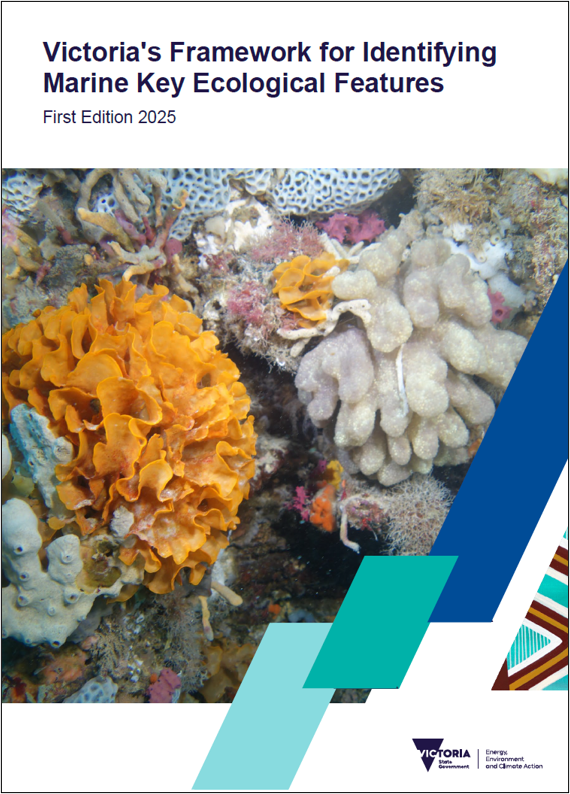
Interactive Web Map - Victoria's Marine Key Ecological Features
Page last updated: 01/10/26